McKinsey & Co. People Development - Global Intranet Site
CLIENT: Perficient XD
Project Overview
Unifying Multiple Systems Into One Personalized, Engaging Global Portal
McKinsey & Company needed a unified, intuitive intranet experience for its internal consultants to better access learning tools, development resources, and HR content. Their existing ecosystem—spanning over a dozen disconnected SharePoint-based sites—was fragmented, overwhelming, and underutilized.
McKinsey & Company needed a unified, intuitive intranet experience for its internal consultants to better access learning tools, development resources, and HR content. Their existing ecosystem—spanning over a dozen disconnected SharePoint-based sites—was fragmented, overwhelming, and underutilized.
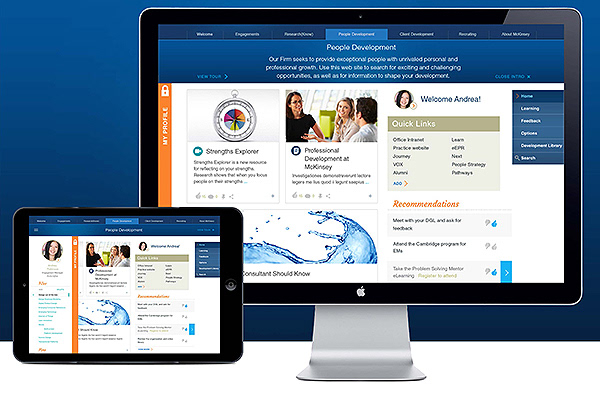
In partnership with Perficient’s XD team, I led the UX/UI redesign of a new global People Development portal (Sharepoint technology), transforming it into a modern, secure, and personalized intranet that significantly improved usability, mobile accessibility, and employee engagement.
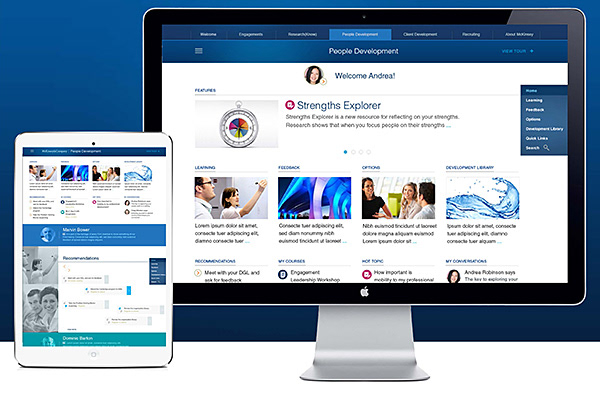
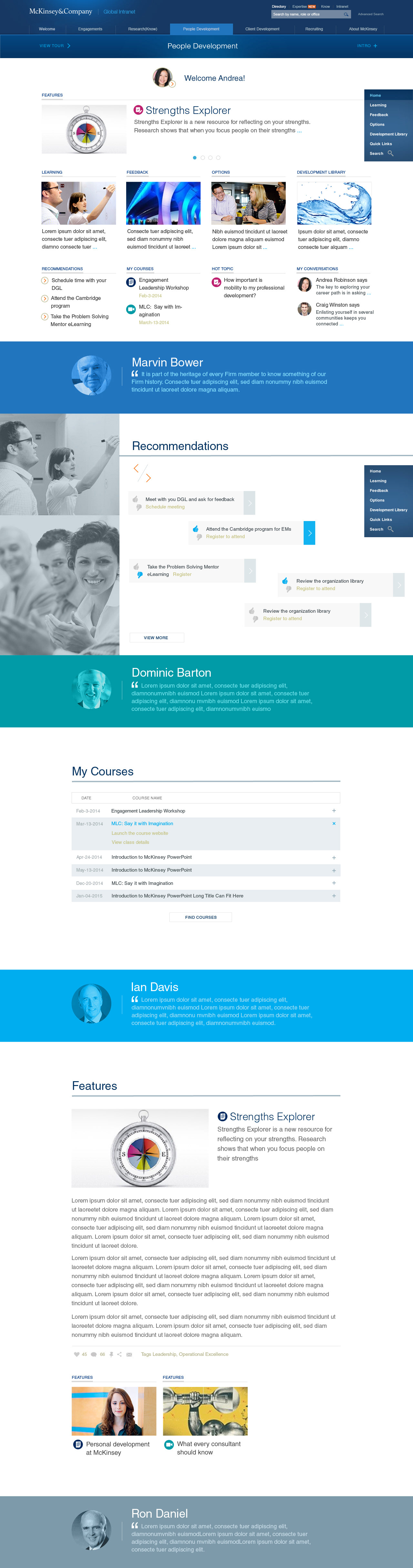
Final Homepage (Desktop & Tablet)
My Role
UX/UI Design Lead · IA Specialist · Design Systems Contributor
As a Lead UX/UI Design Consultant and hands-on contributor, I was responsible for:
As a Lead UX/UI Design Consultant and hands-on contributor, I was responsible for:
• Addressing research and stakeholder discovery results
• Designing information architecture, sitemaps
• Creating responsive UI designs for desktop, tablet, and mobile
• Collaborating across product, development, and strategy teams at Perficient
• Facilitating alignment across McKinsey’s global HR and L&D stakeholders
• Documenting detailed design rationale to streamline feedback and approvals
• Supporting delivery across six rounds of design iterations
Results
• +280% increase in employee engagement with learning tools and polls post-launch
• Delivered a modern, consolidated platform that replaced 12+ disconnected intranet tools
• Created a vibrant, employee-first design system that departed from a cold corporate tone
• Improved mobile accessibility and document management workflows
• Integrated secure personal document storage and personalized user dashboards
• Introduced polls and course recommendations to drive interaction
My Profile - Secured Employee Repository

Our Partnership - Polls (Desktop & Mobile)


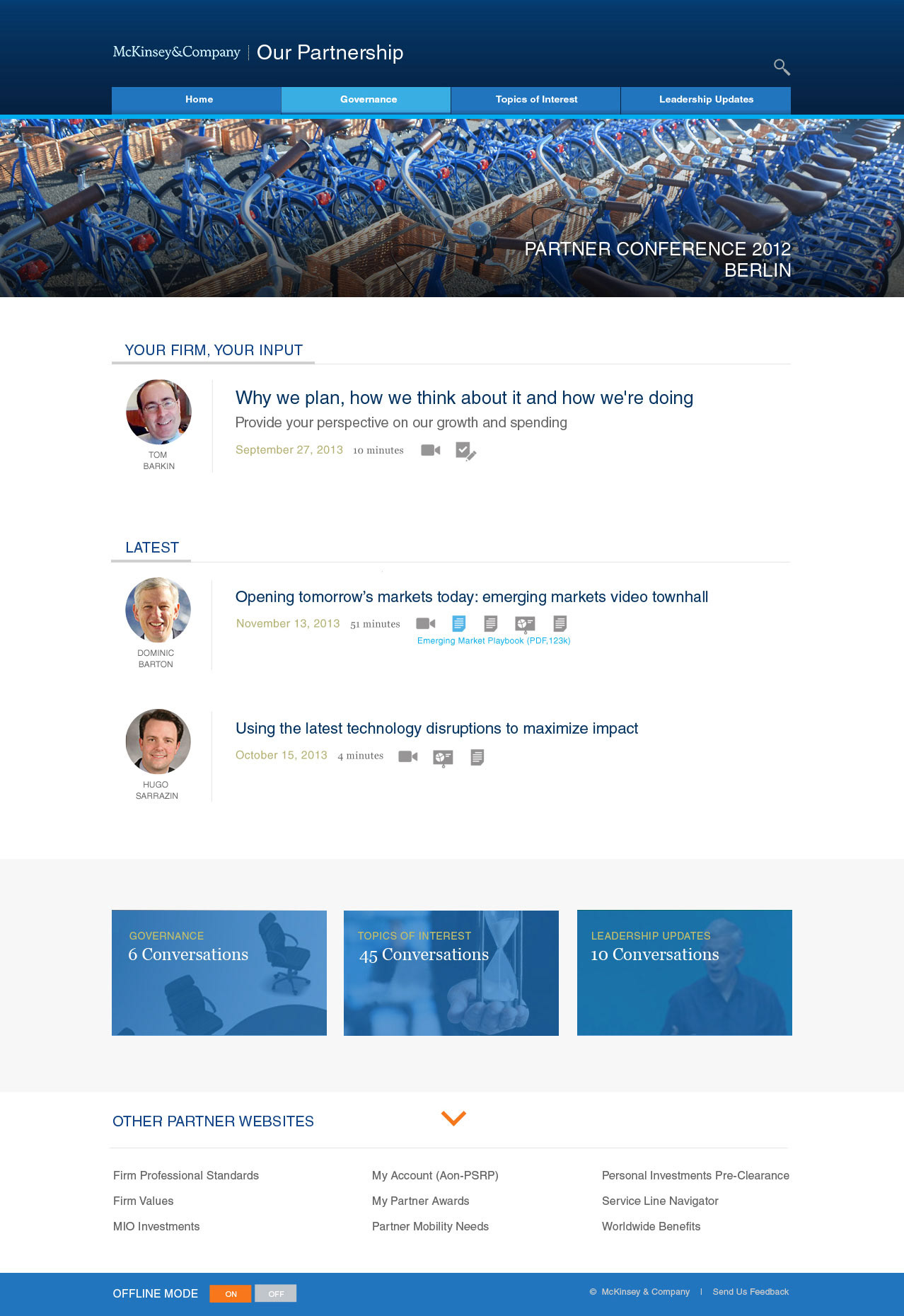
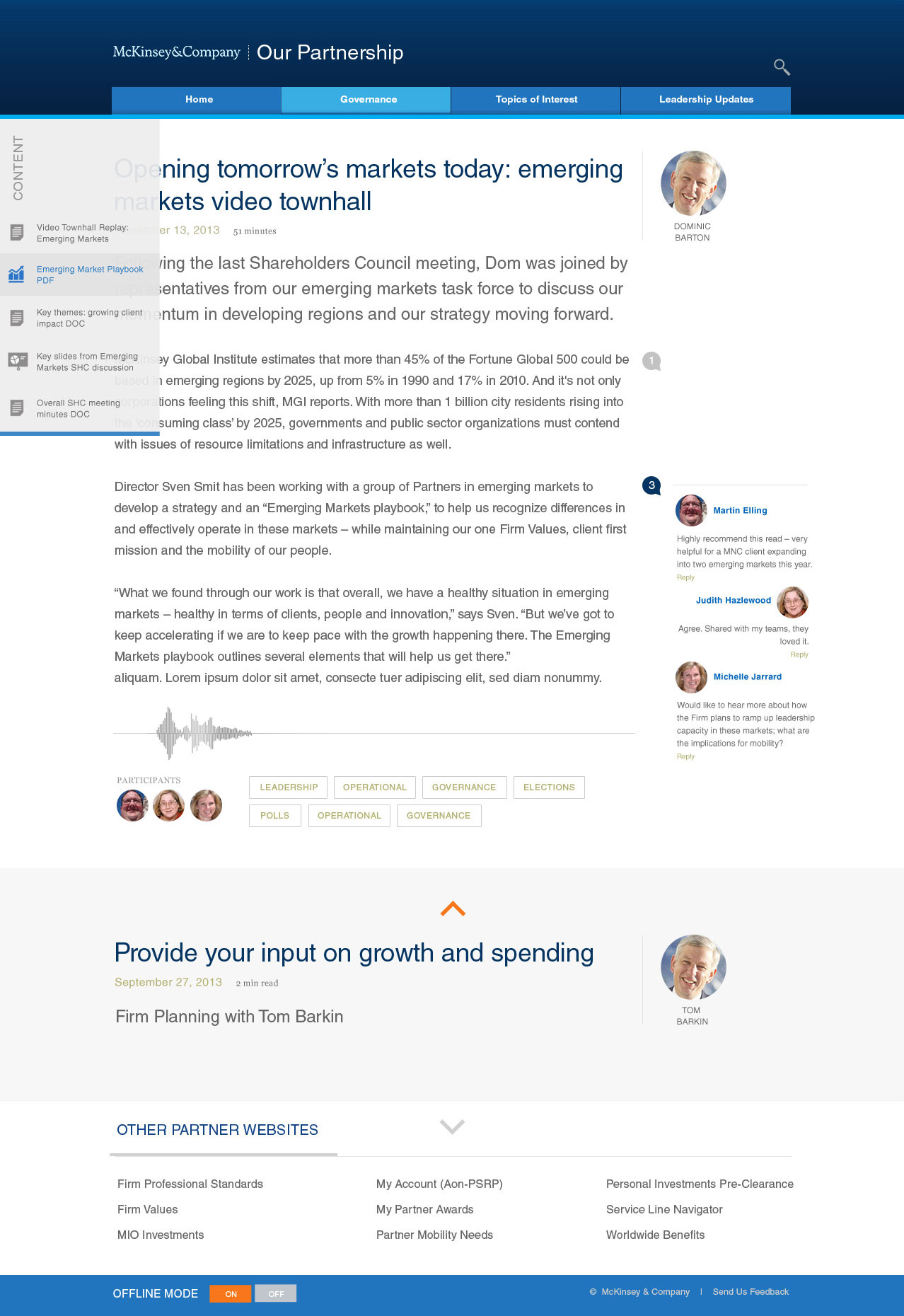
Our Partnership - Governance

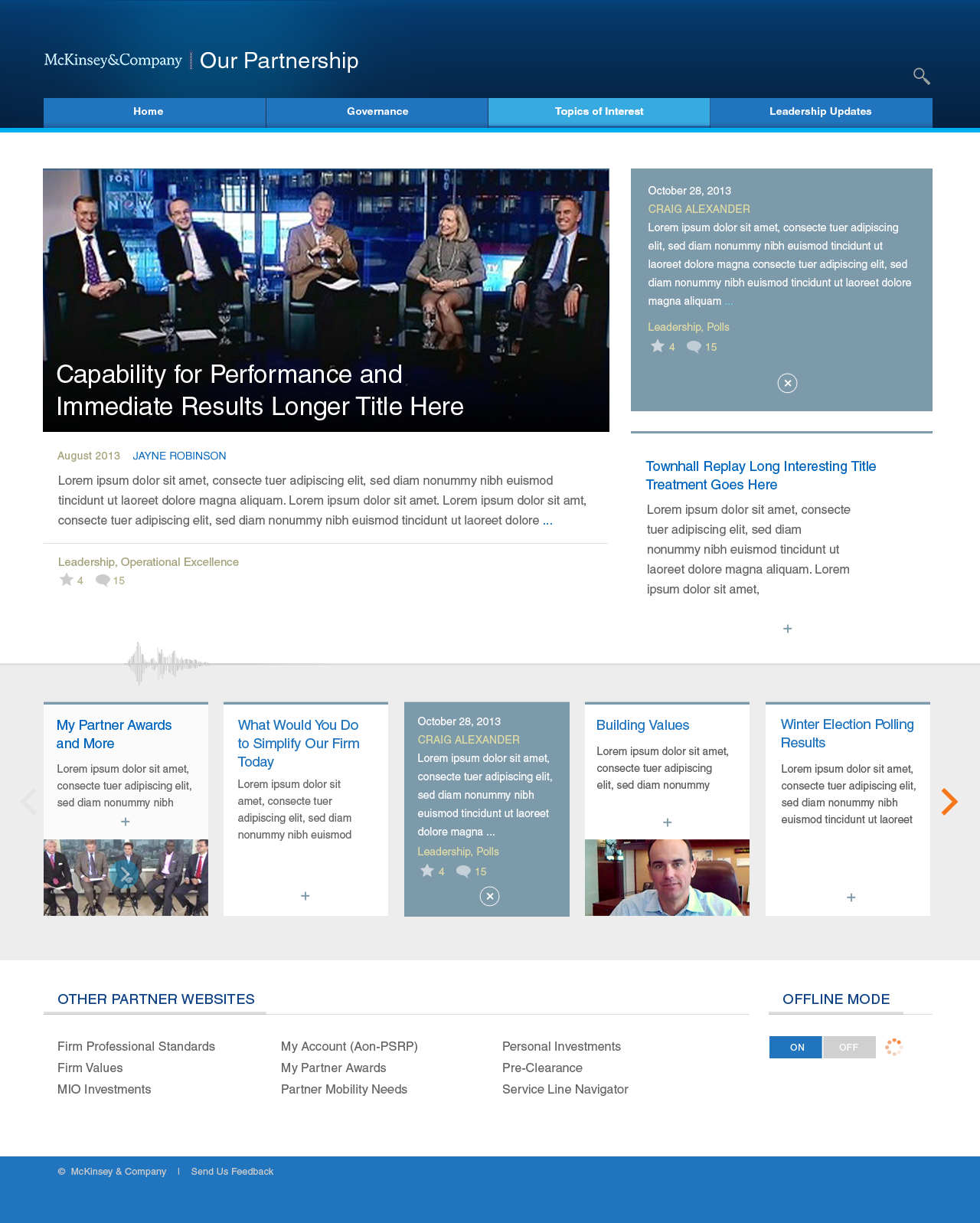
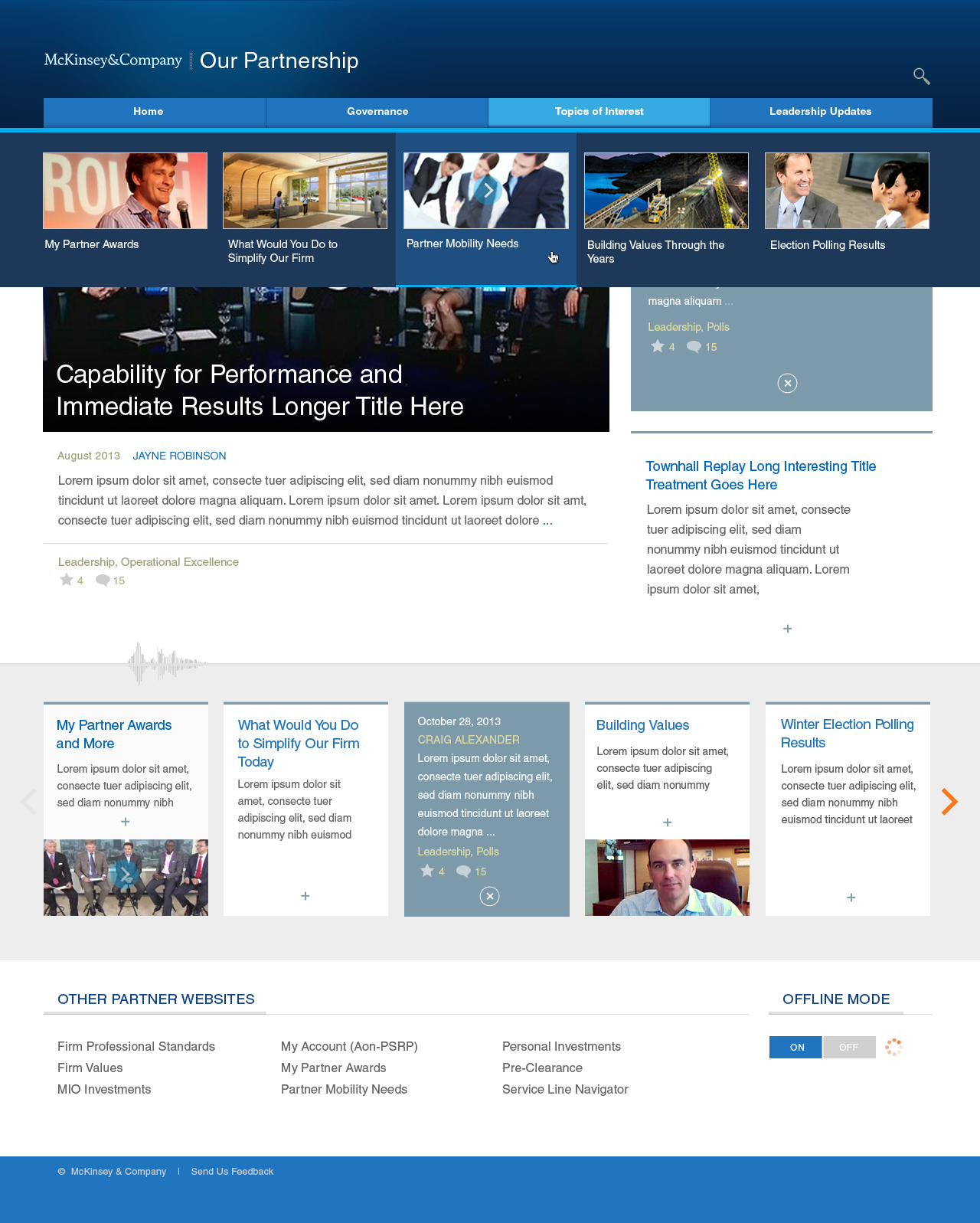
Our Partnership - Topics of Interest
The Challenge
The existing intranet environment was siloed, uninspiring, and difficult to navigate. Key issues included:
The existing intranet environment was siloed, uninspiring, and difficult to navigate. Key issues included:
• Scattered content across multiple disconnected tools with no central hub
• Lack of personalization or relevance filtering, causing users to miss key information
• Over-reliance on word of mouth to discover resources
• Limited social or collaborative functionality, despite McKinsey’s strong internal culture
• A user experience that felt administrative and impersonal—out of sync with McKinsey’s values
• Low trust in storing personal journal or goal-setting information within the existing system
• Varying stakeholder opinions and expectations across teams created alignment friction
Additionally, the site did not meet accessibility and inclusivity standards, requiring us to redesign visual elements, color contrast, and content hierarchy to meet modern UX and WCAG 2.0 compliance.
Alternate Homepage Design V2
Design Iteration Loop
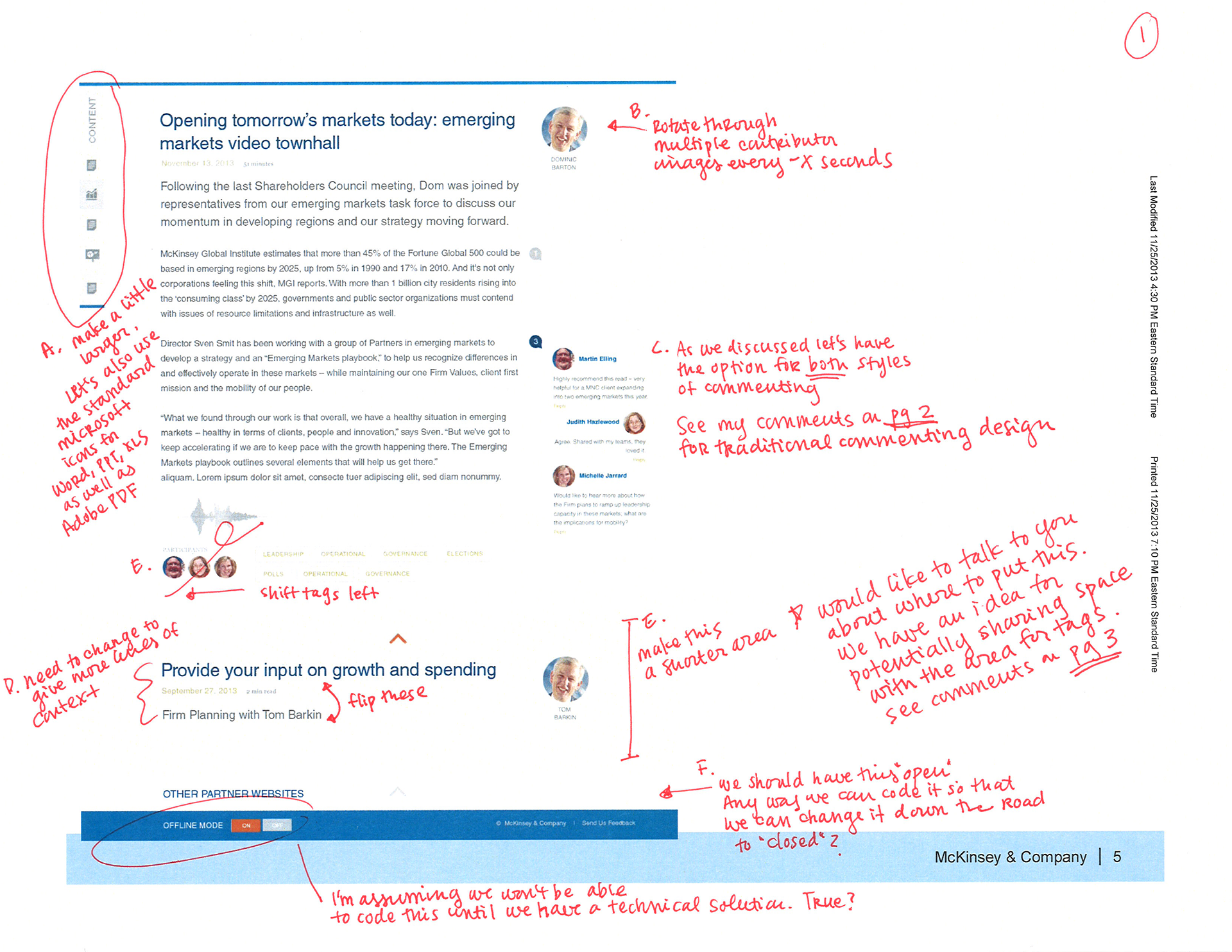
Navigating feedback was particularly challenging because of the varying opinions among team members and stakeholders. I invested time in creating detailed documentation to minimize dependence on personal opinions and to clearly communicate the design and development rationale. This approach helped keep the project moving forward and ensured that timelines remained on schedule, resulting in six rounds of design revisions.
Research
The research approach was critical to aligning the design strategy with user pain points and business priorities.
The research approach was critical to aligning the design strategy with user pain points and business priorities.
Employee Pain points identified:
• No central hub to access all development-related tools
• Hard to find relevant content—no personalization or filtering
• Fear of missing out on valuable resources due to platform fragmentation
• Limited ability to collaborate or share learnings across teams
• Desire for a space that reflects McKinsey’s people-first culture—not a generic corporate portal
• Low trust in storing sensitive information in the current environment
Methods Used:
• No central hub to access all development-related tools
• Hard to find relevant content—no personalization or filtering
• Fear of missing out on valuable resources due to platform fragmentation
• Limited ability to collaborate or share learnings across teams
• Desire for a space that reflects McKinsey’s people-first culture—not a generic corporate portal
• Low trust in storing sensitive information in the current environment
Research insights shaped both the content structure and interaction model—moving from a tool-first layout to a user-first, experience-driven design.
Moodboard

Sitemap

Insights & Reflections
Personalization builds relevance. A content-rich intranet must feel filtered and tailored to be truly useful.
Design tone matters. Moving away from corporate austerity toward a vibrant, human-centered UI encouraged trust and engagement.
Documentation is key to alignment. Providing clear design rationale helped streamline stakeholder feedback across global teams.
Consolidation improves findability. Bringing 12+ sites into a single structure greatly improved navigation and reduced search fatigue.
Accessibility drives adoption. Inclusive design wasn’t a checklist—it was foundational to building a platform consultants actually wanted to use.
Design tone matters. Moving away from corporate austerity toward a vibrant, human-centered UI encouraged trust and engagement.
Documentation is key to alignment. Providing clear design rationale helped streamline stakeholder feedback across global teams.
Consolidation improves findability. Bringing 12+ sites into a single structure greatly improved navigation and reduced search fatigue.
Accessibility drives adoption. Inclusive design wasn’t a checklist—it was foundational to building a platform consultants actually wanted to use.